
Training data for AI
Data for models that learn from language, action, and the physical world.
Helios AI scopes, sources, annotates, and licenses datasets for three kinds of AI work: language and multimodal models, robotics, and world models. Every dataset ships with documented provenance and agreed usage rights.
HX-SFT-0318 Illustrative
- Instruction
- Summarize the result below for a patient newsletter in three sentences. Keep the numbers, avoid jargon, and do not imply the treatment is approved.
- Input
- Phase II, n=120. Primary endpoint: 12-week reduction in HbA1c. Treatment arm −0.9 percentage points vs −0.3 placebo (p<0.01). Mild GI events in 14% of treated participants.
- Response
- In a mid-stage study of 120 people, those who took the study drug saw their long-term blood sugar measure fall by 0.9 points over 12 weeks, compared with 0.3 points for those on a placebo. About 1 in 7 people taking the drug had mild stomach side effects. The drug is still being studied and is not yet approved.
Clinical-trial summary instruction. Instruction–response pair written to a style guide, with a reviewer check on factual fidelity.
AI Model DataWhat we provide
Three kinds of data, each with its own requirements.
Language models, robots, and world models learn from different evidence. We scope, collect, and document each accordingly.
AI Model Data
For teams pretraining, fine-tuning, aligning, or evaluating language and multimodal models, and for enterprises preparing their own knowledge for AI.
- Instruction & SFT
- Preference & rubrics
- Evaluation sets
- Agent trajectories

Robotics Data
For robotics teams training manipulation policies and perception models, from first-person human demonstrations to synchronized robot state and action logs.
- Egocentric demonstrations
- Multi-view capture
- State & action trajectories
- Success annotations

World Model Data
For researchers building models of physical dynamics, spatial layout, and cause and effect, from continuous video to action-conditioned sequences.
- Temporal state changes
- Video–language alignment
- Spatial relations
- Action-conditioned sequences
Sample records
See what a delivered record looks like.
Each sample shows the record structure, annotations, and production method. All are illustrative examples, not customer data.
HX-AGT-0451 Illustrative
User goal
"I was charged twice for order 88213. Can I get one refunded?"
- 1
Plan
Confirm the duplicate charge, check refund policy, then refund one charge.
- 2
Tool call · get_order
{ "order_id": "88213" }
- 3
Observation
2 captured payments of $64.00 on 2025-03-02, 41 seconds apart.
- 4
Tool call · get_policy
{ "topic": "duplicate_charge" }
- 5
Tool call · issue_refund
{ "payment_id": "pay_2", "amount": 64.00 }
- 6
Response
You were charged twice. I refunded the second $64.00 payment; it should appear in 5–10 business days.
Outcome · successCorrect payment refunded; policy consulted before action.
Refund workflow agent trace
Structured trajectory of plan, tool calls, observations, and final response, with an outcome label.
- Pillar
- Model Data
- Modality
- Structured & Relational, Text & Documents
- Use case
- Agent tool use & workflow trajectories
- Method
- Human-annotated
- Plan steps
- Tool calls + arguments
- Observations
- Outcome label
Data portfolio
Explore the portfolio by modality.
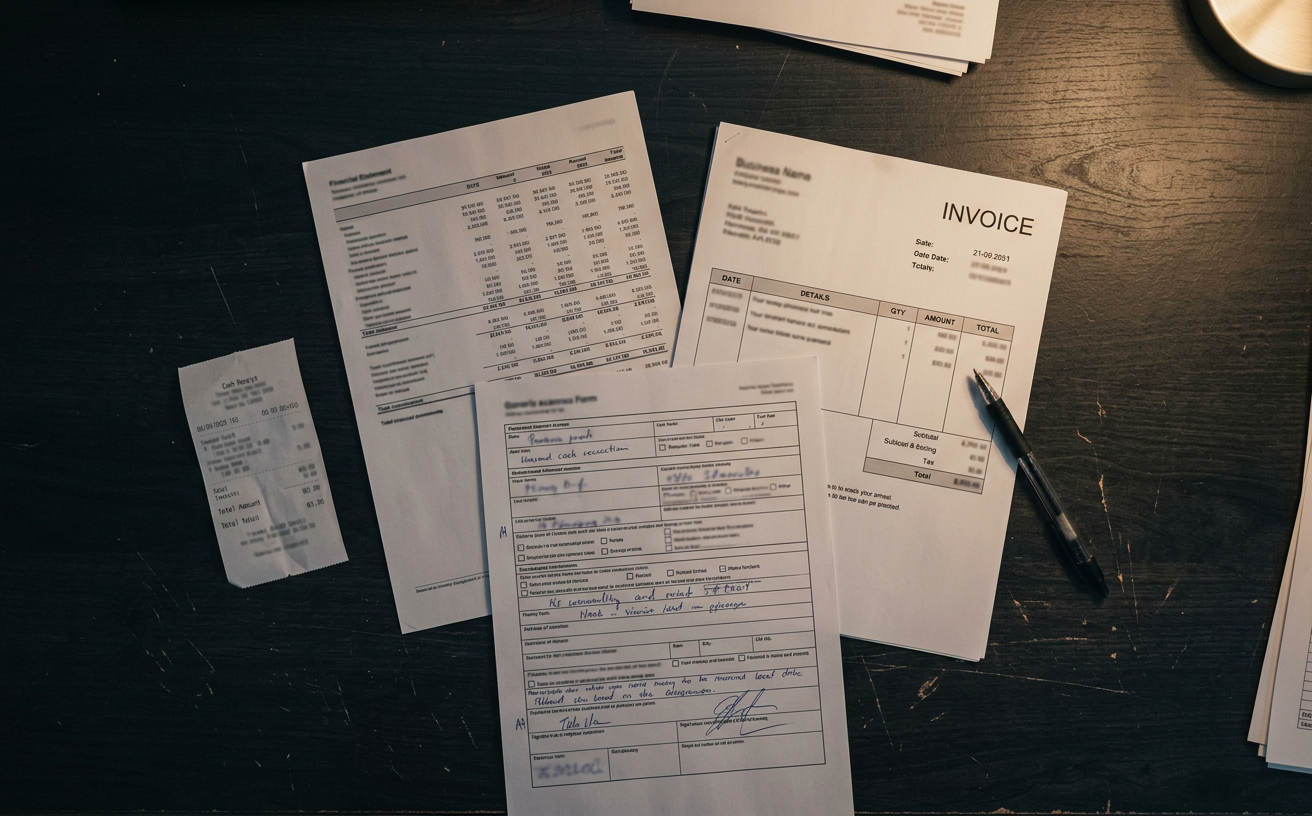
Each category shows the kinds of data we work with and the information we document. Availability varies by dataset, so every category starts with a conversation about your requirements.
Text & Documents
Multilingual text, domain corpora, and documents prepared for language and document-understanding models.
- Multilingual text
- Domain corpora
- OCR
- Document layouts
- Tables
- Structured extraction
- Typical annotation
- Layout regions, reading order, entities, key–value fields, table structure
- Common formats
- JSONL, Parquet, PDF + JSON sidecars
What we document for every dataset
The information technical, procurement, and legal reviewers need before a license is signed.
- Modality & intended useWhat the data is and the model behavior it is meant to support.
- Domain, language & geographyCoverage where known, stated per dataset rather than assumed.
- Collection & provenanceHow, where, and from whom the data was obtained.
- Annotation & quality checksLabel schema, guidelines, review passes, and acceptance results.
- Format & deliveryFile formats, schemas, packaging, and transfer method.
- Licensing scope & restrictionsPermitted uses, term, exclusivity if any, and restrictions.
- Sample availabilityWhether a representative sample can be shared for review.
Industries
Data shaped by the domain it comes from.
Domain requirements change who can author or review data, how privacy is handled, and what counts as correct.

Healthcare & Life Sciences
Clinical documents, imaging, and research data handled under project-specific privacy review.
- Medical document extraction
- Imaging annotation by qualified reviewers
- Evaluation for clinical assistants
Text & Documents · Images · Structured & Relational
Discuss this domainRobotics & Physical AI
Demonstrations of real manipulation and navigation for policies that must act in physical space.
- Egocentric manipulation video
- Multi-view capture with action labels
- Synchronized motion and sensor streams
Video · Sensor & Time-Series · 3D, Spatial & Geospatial
Discuss this domain
Autonomous Mobility
Road and sidewalk scenes for perception, prediction, and long-tail scenario coverage.
- Camera and LiDAR scenes
- Tracking across frames
- Rare-event scenario sets
Video · 3D, Spatial & Geospatial · Sensor & Time-Series
Discuss this domain
Manufacturing & Industrial AI
Inspection imagery, telemetry, and procedures from working production environments.
- Defect detection imagery
- Machine telemetry with event labels
- Procedure and maintenance documents
Images · Sensor & Time-Series · Text & Documents
Discuss this domain
Engagement
License what exists, or have it built to your specification.
License existing data
Review documentation and a representative sample of an existing dataset, then license it for a defined scope.
When a suitable dataset already exists.
Custom collection & annotation
We design the protocol, recruit contributors or reviewers, capture or author the data, and annotate it to your schema.
When the task, environment, or domain is specific to you.
Preparation & evaluation
Clean, de-identify, structure, or evaluate data you already hold, or build held-out test sets.
When you have raw data or need to measure a model.
How a project runs
- Step 1
Scope
Model objective, data definition, scale, timeline, and constraints.
- Step 2
Sample
A pilot or representative sample, reviewed against agreed acceptance criteria.
- Step 3
Agree terms
Usage rights, restrictions, privacy requirements, and delivery format in writing.
- Step 4
Produce
Collection, authoring, or preparation with ongoing quality review.
- Step 5
Deliver
Versioned delivery with schema, data card, and quality report.
Clear provenance. Defined usage rights.
Every dataset is delivered with documentation that states where it came from, how it was produced, and what it may be used for.
Provenance
Each dataset records how, where, and from whom data was obtained, including any third-party licenses and contributor agreements.
Usage rights
Permitted uses, term, territory, and restrictions are defined per project. We do not imply rights beyond what is agreed in writing.
Privacy & consent
Participant consent, de-identification, and redaction requirements are agreed before collection and documented in the data card.
Quality review
Written guidelines, calibration rounds, sampled second-pass review, and agreement metrics, reported with every delivery.
Packaging & acceptance
Schemas, file structure, and acceptance criteria are fixed during scoping, so delivery can be checked against them.
AI Data inquiries